Practical questions
Q: What is your background Kate?
My background is in Nursing, Therapy (including Hypnotherapy) and Life coaching, and I love a bit of amateur dramatics. I am 100% a ‘people person’, and absolutely love interacting with new people. Read more on the About page.
Q: Are there any limitations to a Celebrant-led ceremony?
The only limitation, really, is for Wedding ceremonies. Here in England, a Celebrant-led Wedding ceremony is not legally-binding. That does mean you can request your ceremony location anywhere – even outdoors on the beach or on the moor. But you will also need to complete the legal paperwork separately at a Registry office.
Q: How long does a ceremony last?
Typically between 20–40 minutes, depending on your choices, readings, and symbolic rituals.
Q: How far in advance should we book?
As early as possible, especially for summer weddings. Funerals, of course, are arranged at shorter notice, and I always do my best to accommodate families swiftly.
Q: What does it cost?
Fees vary depending on the type of ceremony, location, and preparation time. I’ll always give you a clear quotation up front, with no hidden extras.
Q: What’s the process of working with you?
- We begin with a friendly chat to see if we’re the right fit.
- I’ll send a booking form and deposit details.
- We then meet (in person or online) to discuss ideas, wording, and tone.
- I create a bespoke script and send it for your approval.
- On the day, I arrive early to ensure everything runs smoothly.
Q: Will you travel outside Devon?
Yes, I’m based near Bovey Tracey and happily travel across Devon, Cornwall, Somerset, and beyond by arrangement.
Weddings
Q: What exactly does a celebrant do at a wedding?
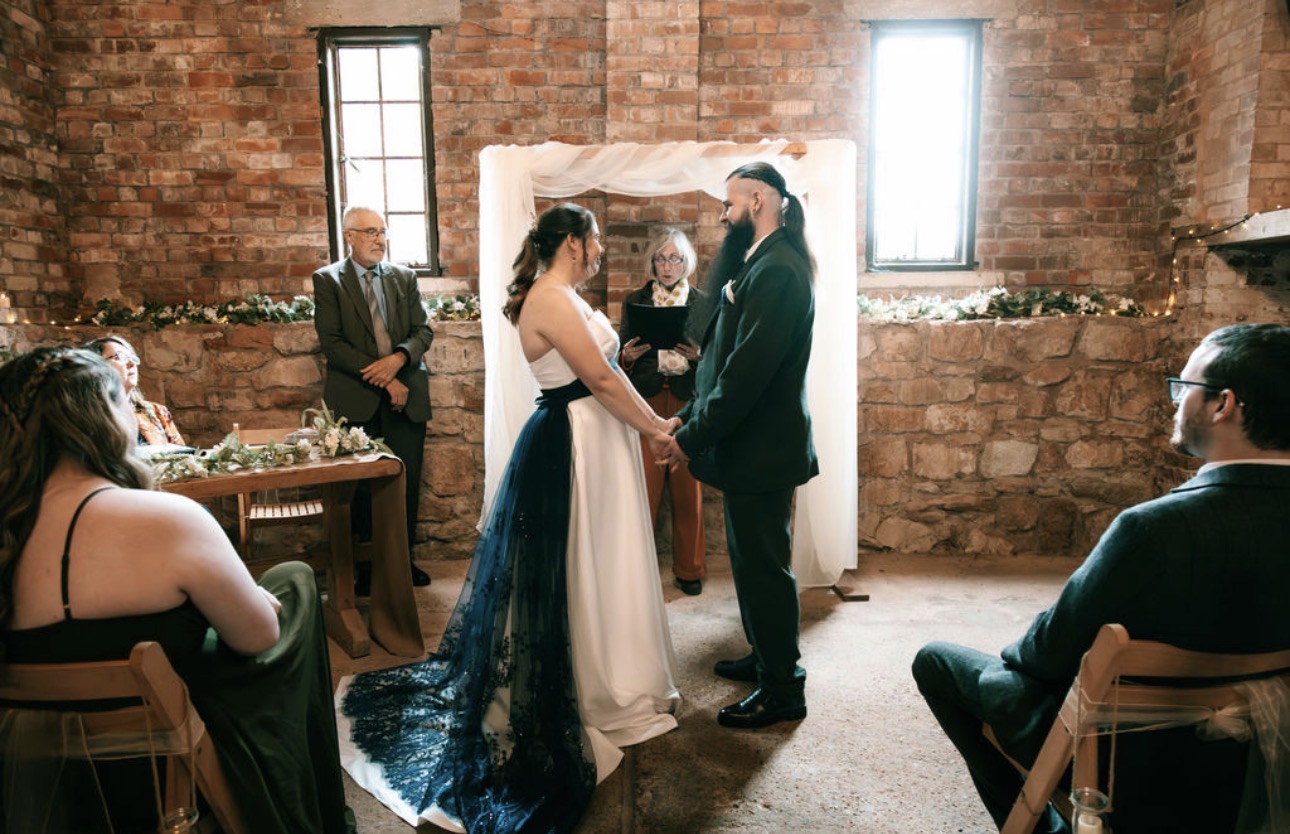
A celebrant creates and leads a personalised ceremony that reflects your personalities, beliefs, and story. Unlike a registrar, a celebrant isn’t restricted by legal or religious wording so your ceremony can be as traditional, quirky, humorous, romantic, or unconventional as you wish.
Q: Is a celebrant wedding legally binding?
Not yet in England and Wales. You’ll still need a short legal signing at your local registry office to make your marriage official. Most couples do this a few days before or after the celebrant ceremony, much like registering a birth before holding a naming day.
Q: Can we include religious or spiritual elements?
Absolutely, if you wish. A celebrant ceremony is about you, so whether you’d like a reading from a sacred text, a moment of reflection, or a fully secular script, it’s your choice.
Q: Can we have a themed or outdoor wedding?
Yes! Many couples choose settings that reflect their passions, from beaches to barns, forests to family gardens. I’ve even seen pirate weddings (and loved them!).
Q: Can we write our own vows?
Yes, and I’ll help you shape them so they feel genuine and flow beautifully when spoken aloud.
Naming ceremonies
Q: What’s a naming ceremony?
It’s a wonderful, non religious way to welcome a child into the world, honour a new name, or celebrate family. It can include readings, promises, symbolic gestures, and as much laughter or sentiment as you like.
Q: Can we include godparents or guide-parents?
Of course. You can call them whatever feels right: godparents, guide parents, mentors, or simply special people.
Q: Where can a naming ceremony be held?
Anywhere meaningful, at home, in a garden, park, village hall, or venue of your choice.
Funerals & Celebrations of life
Q: What’s the difference between a celebrant funeral and a religious service?
A celebrant funeral focuses on the individual’s life story, their character, and what made them special. It can include music, readings, humour, and personal memories. While not a religious service, it can include spiritual or faith based elements if the family wishes.
Q: How do you create the eulogy?
I spend time with the family to gather stories, memories, and details about the person’s life. From that, I craft a eulogy that feels authentic and compassionate, something that truly reflects who they were.
Q: Can we include family or friends in the ceremony?
Absolutely. You can choose who reads, speaks, or contributes music, poetry, or memories.
Q: Do you work with funeral directors?
Yes. I collaborate closely with local funeral directors to ensure the ceremony flows smoothly and honours your wishes.
Other Life ceremonies
Q: Do you offer ceremonies for other occasions?
Yes. I offer ceremonies for vow renewals, divorces or separation healing, coming of age, retirements, new homes, or any meaningful life transition.
Q: What’s a divorce or separation ceremony?
It’s a gentle way to acknowledge an ending while creating space for new beginnings, helping people move forward with respect and closure.
Transitions by Kate Guest
Celebrating the stories, love, and milestones that make us human.